Is Your Management System Alive? The Rise of the "Living App" in Animal Welfare
The Problem with Static Systems
Here's the thing about traditional animal care software — it's built like a monument. Solid, permanent, and completely incapable of change. In fact, the facilities I still see relying on spreadsheets and disconnected records systems in 2026 aren't the exception. They're more common than you'd think.
You input behavioral observations, medical treatments, enrichment activities, diet plans. The system stores them. End of story.
But what about the patterns you're not seeing? The correlations between environmental conditions and behavioral changes that only become apparent across months of data? The fact that your team is constantly learning, adapting protocols, and responding to each individual animal's evolving needs?
Your software just... sits there. Static. Unchanging. Dead.
And yet the animals you care for are anything but. They're learning which keepers bring the best enrichment — yes, they know. They're adapting to seasonal shifts, new social dynamics, novel environments. Every single day, they're teaching us something new about what they need to thrive.
Shouldn't your software do the same?
What if your animal management system could grow and adapt like the animals themselves?
What if it could grow and adapt like the people caring for them, too?
What If Your Software Could Actually See?
Imagine a system that doesn't just wait for a keeper to enter an observation — it watches. Continuously. Objectively. Without fatigue, distraction, or the cognitive load that comes with managing a hundred other things at once.
The Animal Welfare App's Computer Vision integration does exactly that. Using real-time camera feeds, the system monitors behavioral indicators 24 hours a day, seven days a week — detecting posture changes, movement patterns, social interactions, and anomalies that a human eye might not catch during a routine observation window. It doesn't replace your team's expertise. It augments it with a layer of awareness that never sleeps.
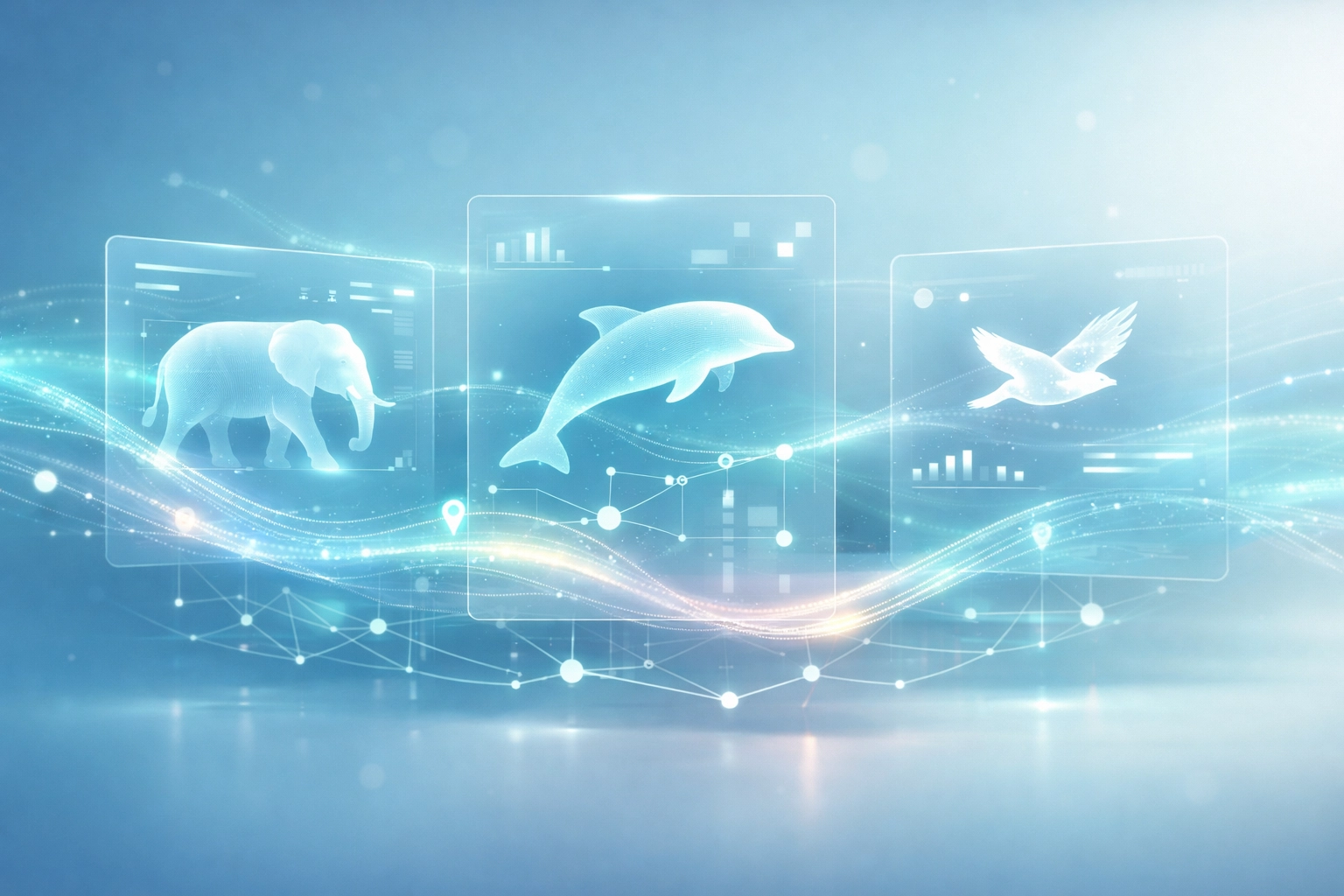
That big cat stress behavior that precedes veterinary intervention by 48 hours? Computer Vision can learn to flag it — not because someone programmed in a rule, but because the system learned what that individual animal's normal looks like and recognized the deviation before it became a crisis.
The Living App: Software That Breathes
Think about environmental enrichment for a moment. You don't give an animal the same puzzle feeder every day for five years and call it enrichment. That's not stimulating — that's a constant. Real enrichment is novel. It evolves. It responds to the animal's changing needs, capabilities, and preferences.
A living app approaches animal care intelligence the same way.
The concept is deceptively simple: your system should be as dynamic as the animals you're caring for. It should learn from every data point, every observation, every outcome — including your team's own decision-making patterns. It should recognize correlations that human eyes miss across thousands of entries. It should get better at its core mission — supporting optimal animal welfare — through continuous use and feedback.
Just as behavioral diversity is a living indicator of welfare rather than a static checkbox, your management system should treat welfare as an evolving process requiring ongoing assessment and adaptation.
How a Living App Actually Works
So what does this look like in practice? If you're a "trekkie" you get it; but let me break it down.
Data-Driven Responsiveness
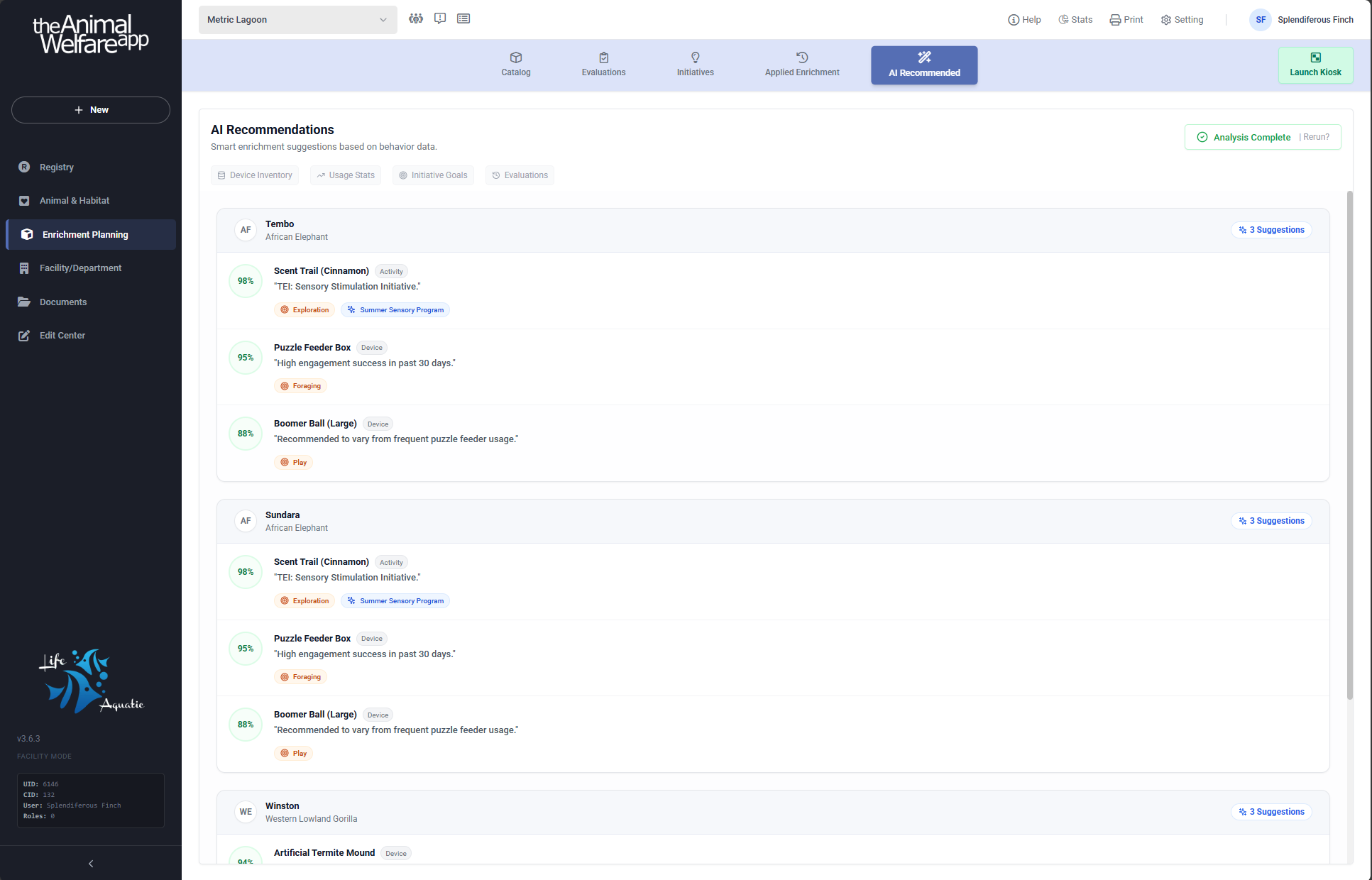
Modern living apps don't just store behavioral observations — they track patterns over time and help you understand what those patterns mean in context. If you're monitoring a dog's behavioral repertoire or an elephant's social interactions, the system learns what "normal" looks like for that specific individual and flags deviations that warrant attention.
Real-Time Monitoring and Adaptive Alerts
Your California condor might retreat to the same corner of the habitat every morning at 8:47 AM. A static system, if it noticed at all, would depend on a keeper happening to observe and log it. A living app with Computer Vision running continuously sees it every time — and learns that this behavior correlates with the maintenance crew arriving at the adjacent enclosure. Not a welfare concern. Just a preference. The system adjusts, and your team stops chasing a false signal.
But when that same condor begins avoiding a perch it previously favored, or shows irregular flight patterns across three consecutive days, the system flags it — because it knows what this bird's normal looks like, and this isn't it.
Collaborative Evolution
The best animal care software consolidates information about learning, environment, genetics, and individual traits while allowing your entire team to contribute continuous updates. But a living app doesn't store those updates in isolation — it synthesizes them.
When your lead keeper notes that an animal responds better to enrichment in the morning, your nutritionist observes improved appetite after exercise, and your veterinarian records better mobility after physical therapy — a living system connects those dots and starts suggesting optimal timing for activities based on the complete picture.
The AI Brain Behind the Interface
Most “AI” in an animal management system today is basically a parlor trick (yes, I said it): a faster filing cabinet. It searches records quicker, it auto-fills fields, it makes reports prettier. Helpful? Sure. But it’s not alive.
A living app treats AI as the foundation of the architecture — the brain behind the interface — and it pays attention to something almost no animal management software pays attention to:
How your people actually use the system.
Not just what they enter about animals, but how they move through the product:
The features they use instinctively (no training required, it just “clicks”)
The workflows they hesitate on (lots of back-and-forth, repeated corrections, extra steps)
The tasks they abandon halfway (started, stalled, never finished)
That interaction data (telemetry, in plain terms: anonymous signals about clicks, paths, and friction) lets the system learn where your animal care apps are helping… and where they’re quietly getting in the way.
In other words: the app learns your team’s behavior, then removes friction automatically.
And here’s the part that changes the game for busy facilities: because the platform can spot patterns across many users (keepers, vets, nutrition, ops), it can flag optimizations without waiting for someone to file a support ticket. If ten facilities keep “bouncing” off the same workflow step, that’s not a training issue — that’s a design signal. A living app notices it, surfaces it, and helps fix it.
Personalization that actually feels like “it gets us”
This is where “AI brain” becomes more than a slogan. The system can anticipate what you need based on:
Your facility type and operating rhythms (aquatic vs. terrestrial, large collection vs. specialized)
Your role (senior vet vs. brand-new keeper)
Your decision-making patterns (what you check first, what you confirm, what you escalate)
So instead of everyone seeing the same one-size-fits-all interface, the animal care software starts to feel tailored — because it is.
Telemetry that guides what gets built next
This is the part most folks don’t consider: a living app doesn’t only learn to help you — it learns to evolve itself.
By watching emerging usage patterns (new routines, new “workarounds,” new sequences people invent to get the job done), the system can reveal unmet needs before they’re formally requested. That telemetry directly informs development priorities, so the animal care software you’re using in March doesn’t feel stuck in the assumptions of last year.
And yes, that’s a big deal in animal welfare work — where protocols, best practice, staffing realities, and species priorities are always moving.
The Interface Revolution: Technology You Already Wear
Here's what genuinely separates this generation of animal care software from everything that came before it: the interface is dissolving.
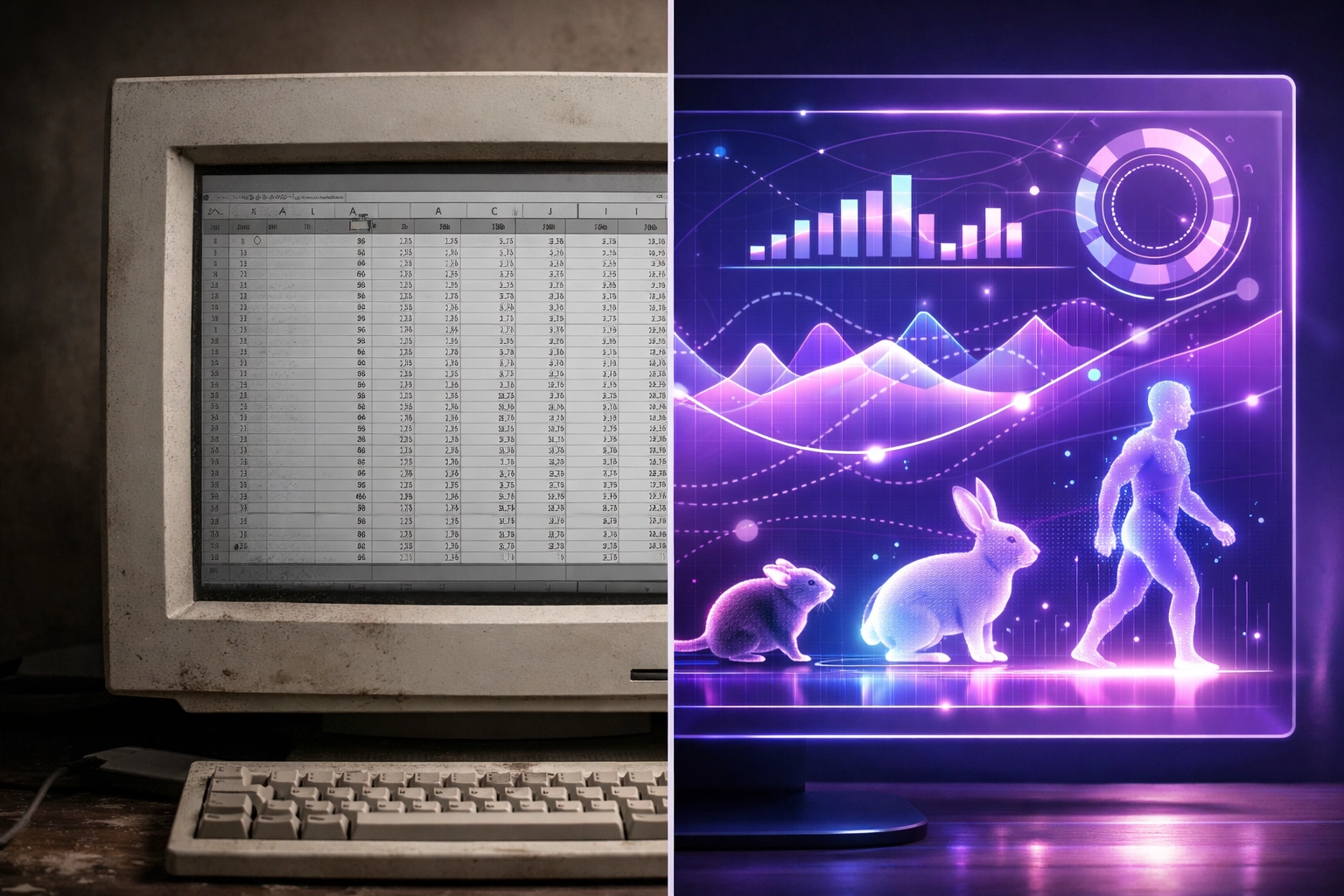
Your team shouldn't have to walk away from an animal to log an observation. With META smart glasses integration, a keeper can record behavioral notes, flag an anomaly, or pull up an animal's complete welfare history — hands-free, eyes on the animal, in the moment that matters. The record captures reality as it happens, not a reconstructed version of it typed in an hour later.
This isn't a gimmick. It's a fundamental shift in how data quality works. The closer observation and documentation happen in time and space, the more accurate and actionable your records become.
The Connectivity Nebula
No facility operates in isolation. Your animals are connected to your environmental sensors, your feeding systems, your medical equipment, your partner institutions, your conservation networks.
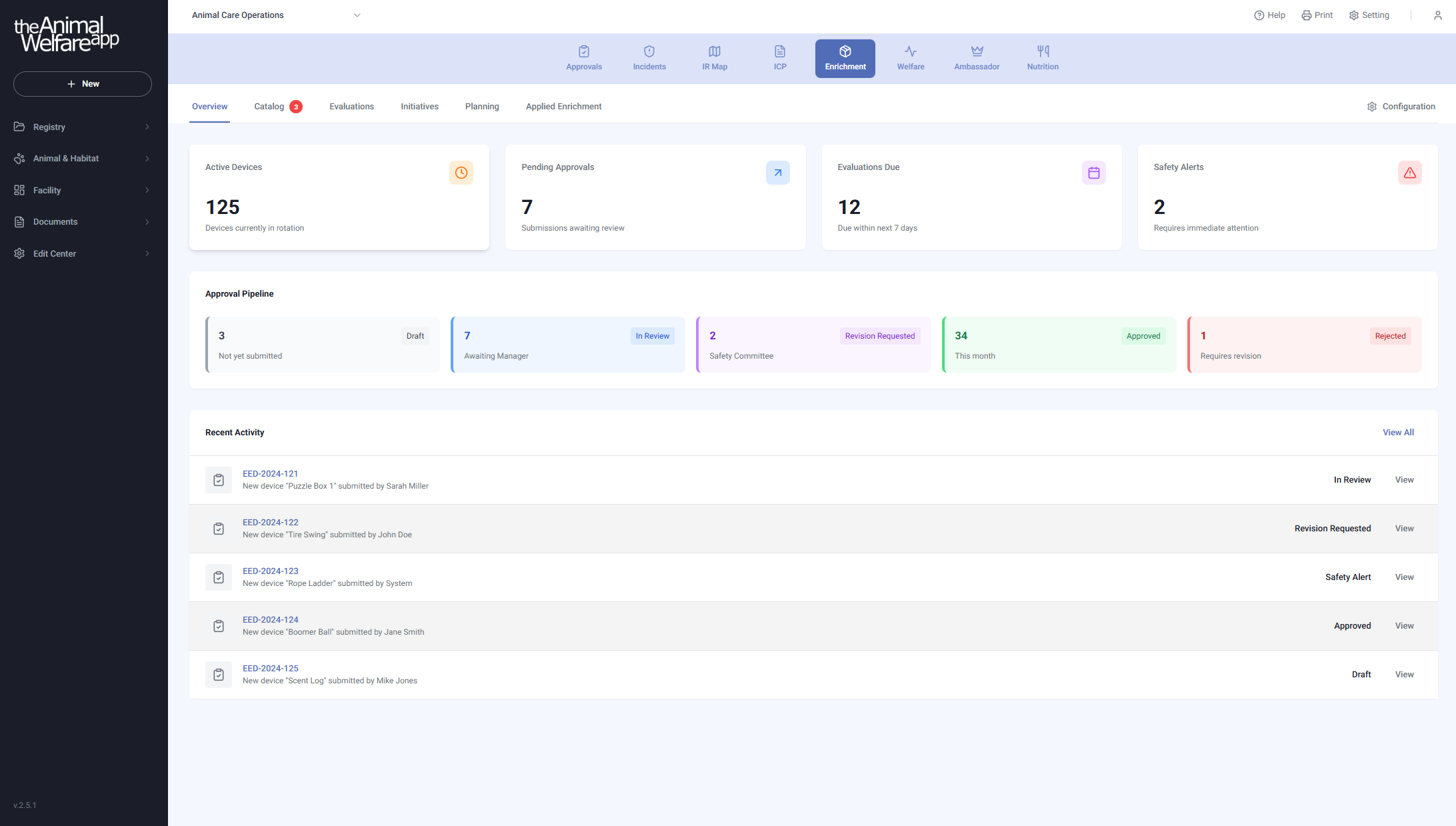
The Animal Welfare App is being built to reflect that reality — not as a standalone database, but as a hub. We're developing integrations with partner device ecosystems so that your humidity sensors, activity monitors, feeding schedules, medical records, and peripheral inputs are all talking to each other and learning from each other. Every connected data source makes the system smarter about every other data source.
This is what separates a living app from traditional animal management software. It's not just about having all the data in one place — it's about having a system that understands the relationships between those data points and continuously improves at identifying what matters most for welfare outcomes.
Why this matters NOW
We're in a critical moment for species preservation. Zoos, aquariums, wildlife sanctuaries, and research facilities aren't just exhibiting animals — they're serving as essential arks for species that may not survive in increasingly threatened wild habitats. The work you're doing isn't just important. It's existential.
That work deserves technology that matches its significance.
When you're managing breeding programs for critically endangered species, you can't afford to miss patterns in reproductive behavior. When you're providing sanctuary for rescued wildlife, you need to understand trauma responses and healing trajectories with precision. When your data could inform conservation strategies that extend beyond your facility's walls, it needs to reveal insights — not just exist in a database.
The Reality You Can Access Today
This isn't a "someday" technology. Computer Vision monitoring is operational. META glasses integration is in active development with partner facilities. The connectivity infrastructure is being built now, with real partners, for real use cases.
The Animal Welfare App is not a promise about 2030. It's a platform that learns from your team's observations, your team's behavior, and your team's unspoken needs, adapts to your facility's specific dynamics, and continuously improves its ability to support the welfare outcomes you're working toward every single day.
Does it make coffee? No.
Does it watch your animals when no one else can, surface patterns your team hasn't had time to find, and meet your keepers where they actually are — in the field, hands on the animals they care about? Absolutely.
Your Turn to Evolve
Your animals aren't static. Your team isn't static. Your understanding of best practice in animal welfare isn't static.
So why is your management system?
The technology exists today to implement a truly living app at your facility — one that sees what your team sees, learns from your expertise, and gets better at supporting your mission with every passing day.
We'd love to show you how it works.
The system you start with won't be the system you have in six months. That's not a bug — it's the whole point.
Ready to see a living app in action? Contact us for a personalized demo and let's talk about what The Animal Welfare App can do for your team — and for the animals who depend on you.

Comments